This research explores Indonesian consumers’ personal hygiene habits, purchase behaviour, and the key factors that influence their choices across hair, face, body, oral care, fragrance, and makeup categories.
Summary
Indonesians display highly self-directed and digitally enabled hygiene routines, with predictable repurchase cycles and selective experimentation driven by age and channel access.
Participants evaluate personal hygiene products in a highly rational and trust-led manner, prioritizing official certification, halal assurance, and social proof before trial.
Participants’ hygiene routines remain essentials-led and functional, with selective investment in treatment products perceived as necessary rather than optional.
Personal hygiene in Indonesia is increasingly shaped by a combination of practical daily needs, digital shopping habits, and careful product evaluation. While consumers are open to trying new products, their routines remain relatively functional, with familiar essentials continuing to form the foundation of personal care.
BOI Research explored personal care habits among 376 Indonesian consumers aged 17–45 from SES A–B, covering urban and rural areas across Indonesia. The study looked at usage across body care, hair care, skincare, fragrance, and makeup, alongside purchase behaviour, decision-making, spending patterns, and the information consumers consider before trying a product.
Personal care shopping has become highly digital
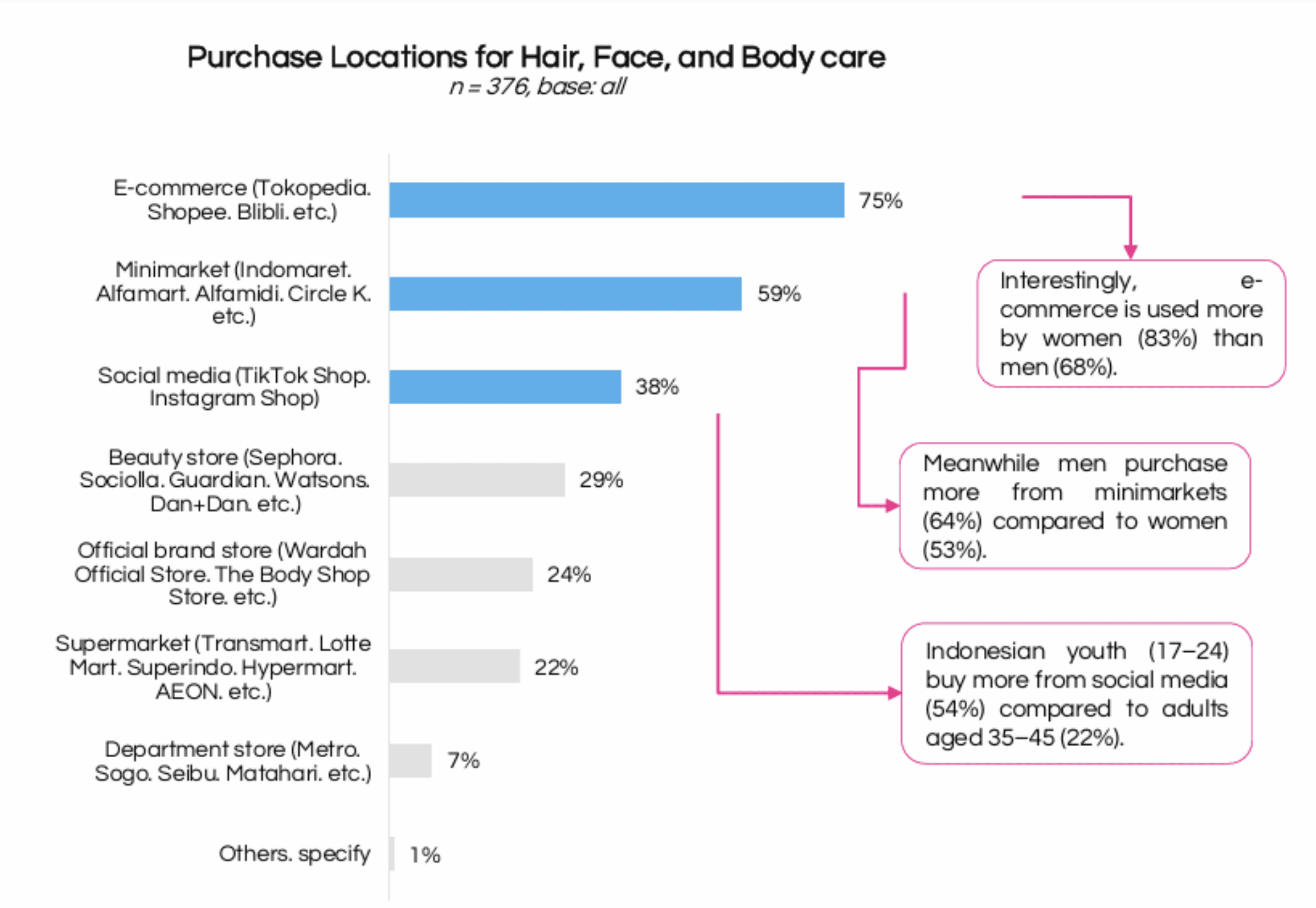
E-commerce has become the main shopping destination for personal hygiene products. 75% of consumers usually purchase hair, face, and body care products through e-commerce, ahead of minimarkets at 59%.
The role of digital channels is particularly visible among younger consumers. Social commerce, including TikTok Shop and Instagram Shop, is used by 38% overall, but rises to 54% among those aged 17–24. Women are also more likely to use e-commerce than men, at 83% versus 68%. Men, meanwhile, show stronger usage of minimarkets.
boi_research Our latest repost on purchasing behaviour of personal hygiene products.
View more on Instagram: BOI Research on Instagram: purchasing behaviour of personal hygiene products (opens in a new tab)